Regular facials help you to have healthy skin, but the benefits go beyond skincare. We hold a surprising amount of tension in our face, head and neck muscles. These areas of tension are associated with a variety of problems that affect both wellbeing and appearance. Relaxing facial treatments encourage the muscles to let go, providing relief from problems such as
- Headaches
- Poor head posture
- Jaw issues (TMJ)
- Neck pain and stiffness
- Facial lines caused by chronically contracted muscles
As well as directly treating muscle tension, the calming, soothing facial experiences helps the nervous system to regulate, reducing stress and anxiety.
What do we mean by relaxing facial treatment
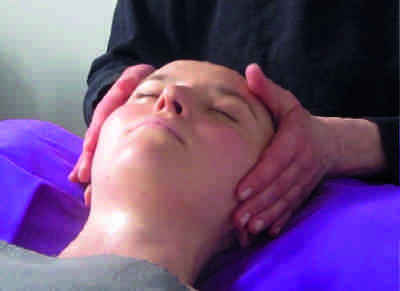
There is a vast choice of targeted facial treatments available at beauty salons and skin clinics. These often use electric currents or advanced exfoliation methods to address specific skincare issues. While they are reputed to give good results for the concerns they address, they are not holistic, relaxing treatments like a classic facial is. A traditional relaxing facial will promote overall skin health and can be tailored to specific issues to a certain extent with the choice of product, but is not as targeted and technology based as other more modern treatments. It is a hands-only treatment, meaning it is calming and soothing and promotes general relaxation. It also incorporates a neck, face and scalp massage, which address the physical tension associated with the issues listed above, as well as calming the nervous system.
Tension headaches, neck pain and head posture

Picture credit: Permission: Dr. Joe Muscolino www.learnmuscles.com – art work Giovanni Rimasti
These 3 issues are closely linked and can end up in a cycle of making each other worse. Tension headaches can be caused by tension is the muscles of the upper back, but one of the most common causes is tension and/or trigger points in the sternocleidomastoid (SCM) muscles of the neck. Having “forward head posture” is a very common issue. This is exactly as it sounds – the head is held forward of its natural position. In this posture, the SCM becomes shortened over time, leading to neck pain and headaches. These in turn, lead to worsening of the head posture. Forward head posture is often caused by desk and screen work, but other factors can also cause it to develop.
The SCM muscles can only receive limited treatment in a face down back treatment. Lying face up for a facial on the other hand allows very good access along their whole length. The massage part of a relaxing facial treatment will work on these muscles to reduce tension and release trigger points.
TMJ issues
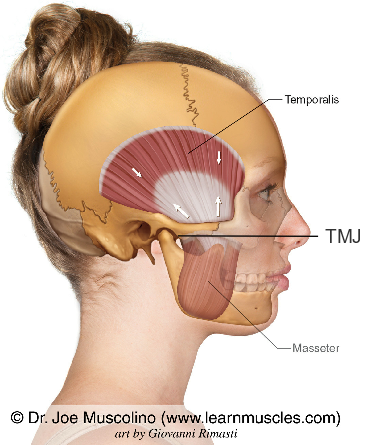
Picture credit: Permission: Dr. Joe Muscolino www.learnmuscles.com – art work Giovanni Rimasti
The TMJ (temporomandibular joint) connects your jawbone to your skull and is directly in front of your ears. The TMJ is one of the most complex joints in the human body. It enables the movements needed for speaking, chewing, swallowing, and yawning by combining a hinge action with sliding motions. A small cartilage disk acts as a cushion between the bones of the joint to keep these movements smooth.
TMJ disorders arise when this system falls out of alignment or experiences excessive strain. A primary cause of TMJ issues is chronic muscle tension. This is frequently caused by stress or anxiety, leading to unconscious teeth grinding or jaw clenching, either during the day or while sleeping. Physical trauma to the jaw, misalignment of the teeth and poor posture (which strains the neck and jaw muscles) can also trigger or worsen the condition. When the surrounding muscles become overworked, they develop painful trigger points that cause localized aching, tension headaches, and restricted jaw movement. Symptoms include jaw clicking and locking.
How face massage helps
Targeted face massage is an effective, non-invasive method to alleviate TMJ discomfort. Massage works by directly addressing the muscular tightness that locks the jaw in a state of tension. By applying firm, gentle pressure to the primary chewing muscles—specifically the masseter muscle along the jawline and the temporalis muscle near the temples—massage stimulates blood circulation. Increased blood flow delivers fresh oxygen and essential nutrients to the tight tissues, which accelerates the healing of fatigued muscles and flushes out built-up metabolic waste.
Furthermore, face massage helps break up painful adhesions and knots within the muscle fibres. This physical release stretches the tissue, relaxes the nervous system, and actively reduces the body’s overall stress response. Regularly massaging these facial zones helps restore the normal length and flexibility of the chewing muscles. As the muscles relax, pressure on the temporalis and mandibular joint decreases. This reduces discomfort and helps the jaw to open and close smoothly without clicking or locking.
Facial lines
Facial lines caused by muscle tension—often called dynamic wrinkles—are creases that form on your skin due to habitual, involuntary muscle contractions. Every time you express an emotion, specific facial muscles contract and pull the overlying skin. When you are stressed, anxious, or deeply focused, you might unconsciously hold tension in these muscles for hours at a time. Over the years, this constant contraction creates a “memory” in the tissue. The muscle loses its ability to fully relax, keeping the skin permanently bunched up and creating visible lines even when your face is at rest.
The primary causes of tension-induced lines are the muscles of the forehead, brows, and mouth. For example, chronic stress or squinting overworks the corrugator muscles between your eyebrows, leading to vertical “11 lines”. Habitually frowning engages the frontalis muscle, which causes horizontal wrinkles across your forehead. Tension held around the mouth from clenching the jaw can tighten the orbicularis oris muscle, resulting in fine vertical lip lines or a downward turn at the corners of your lips. Unlike static wrinkles, which are caused solely by aging and gravity, tension lines are directly tied to the underlying tone and stress levels of your facial anatomy.
How face massage helps
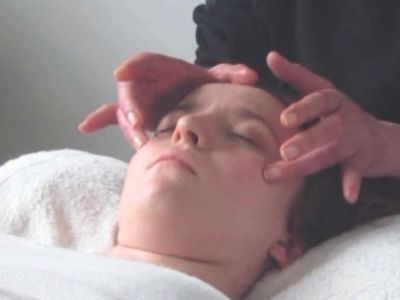
Targeted face massage is a natural approach to softening and preventing these tension-driven lines. Massage works by physically manipulating the contracted muscle fibres to force them out of their chronically shortened state. By applying specific techniques like myofascial release, kneading and vibrations, the muscle tissue can be stretched back to its optimal, relaxed length. This smooths out the surface skin that sits directly above the muscle, reducing the depth of the wrinkles.
Additionally, face massage significantly boosts local blood circulation and lymphatic drainage. Increased blood flow delivers a rush of oxygen, collagen-supporting nutrients, and moisture to the skin cells, which helps plump up shallow creases. Simultaneously, massage stimulates fibroblasts—the cells responsible for producing collagen and elastin—helping to restore the skin’s natural elasticity and resilience. By reducing overall facial stress and breaking the habit of subconscious muscular gripping, regular face massage acts as a natural alternative to wrinkle-relaxing injections, leaving the complexion looking smoother, lifted, and deeply relaxed.
As well as its physical benefits, facial massage promotes deep emotional relaxation. Reducing stress not only helps calm the nervous system but may also decrease unconscious habits such as frowning or jaw clenching that contribute to ongoing facial tension.
Skincare benefits of a relaxing facial
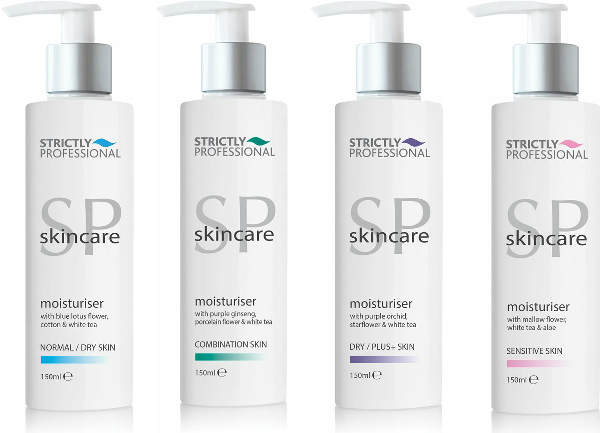
While a lot of the benefits are in mind and body relaxation, a classic facial treatment is of course beneficial to skincare. It incorporates the following steps and products are chosen depending on skincare type/concerns:
- Deep cleanse to ensure the skin is prepared for treatment
- Exfoliation to remove dead skin cells and other debris
- Skin warming with warm towels to improve blood flow anf further prepare to skin to receive treatment
- Massage – benefits as above
- Mask – a concentrated treatment chosen for specific skin type
- Cream or lotion, depending on skin type, to moisturise the skin.
Regular facials help to keep the skin healthy and glowing.